← The stand
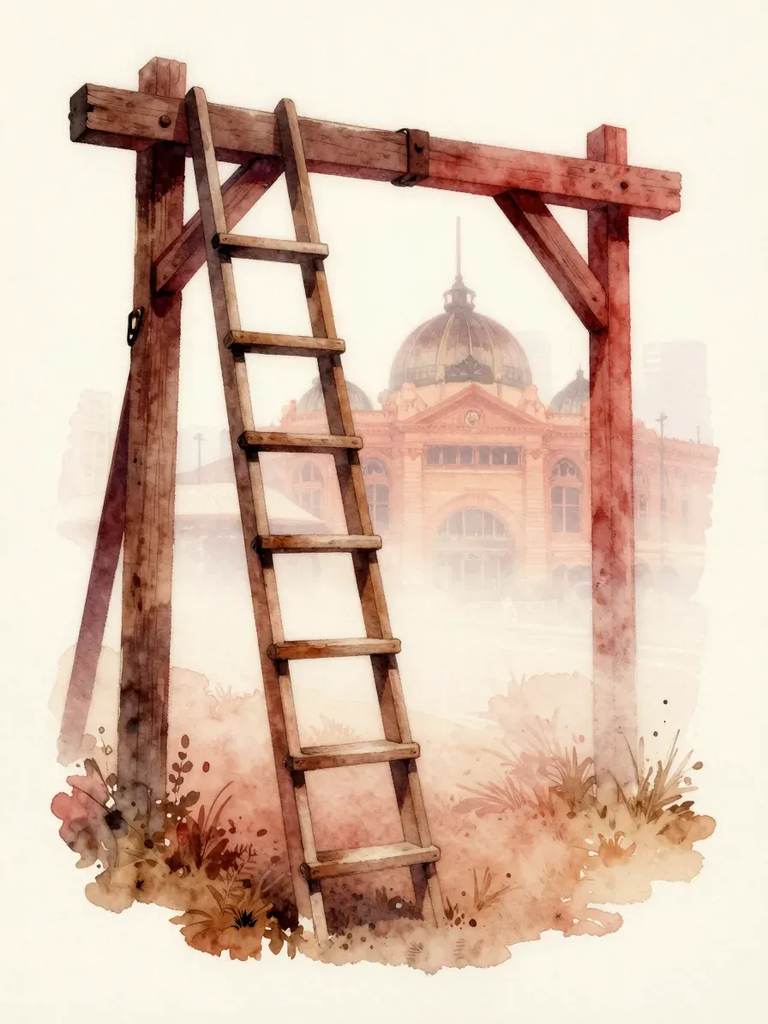
Cover of The Collection, Volume 1, Number 49: The Frontier. Wednesday 14 October 2026, Melbourne. A watercolor wooden ladder and harness frame on cream paper, oxblood accents, Flinders Street Station faint in the mist. Skip cover

Vol. 1  ·  No. 49  ·  Wednesday 14 October 2026  ·  Melbourne


The Collection

The Frontier

Collected and edited by Newsletter World for AK

Contents

Tuesday closed the egress. Wednesday’s letters find the frontier crowded: Meta Wonder, Gemini 4 Argon, five labs near the top, and enterprise architecture that cannot chase the leaderboard. Harness engineering becomes the control plane. OpenAI prints a research-intern milestone in agent-workdays. Jamie Dimon keeps outside agents off the accounts, and Harbor raises money to insure the ones that get through. They built the stack around the frontier. Frontier is a tier, not a strategy.

  1. iiiEditor’s LetterThey built the stack around the frontier. Frontier is a tier, not a strategy.03
  2. ivThe CrowdingFive labs near the top. The order changes by task.04
  3. vThe HarnessKeep the control flow out of the prompt.05
  4. viThe InternAgent-workdays on a treadmill. Humans still Decide.06
  5. viiThe DoorDimon closes the accounts. Harbor prices the risk.07
  6. viiiStanding OrdersFour rules for this issue.08

03  ·  Editor’s Letter

They built the stack around the frontier. Frontier is a tier, not a strategy.

Tuesday’s paper closed on egress: the unit of agent safety is not the instruction, it is the outbound rule. Overnight the mail changed key. The frontier is crowded. Meta’s Wonder joins OpenAI, Google, Anthropic and xAI near the top. Gemini 4 Argon lands for Google’s loyalists. CIO Insights says what enterprise buyers already feel: frontier is no longer an enterprise AI strategy.

The rest of the bag is about who holds the controls once the leaderboard stops being a plan. Ken Huang argues that software engineering for deterministic computers is the wrong control plane for agents, and that the harness is where the flow should live. The Sequence carries OpenAI’s own view inside: agent-workdays, a research-intern milestone, and a treadmill that still needs a human hand on Decide. Jamie Dimon will not let outside agents into JPMorgan’s customer accounts. Harbor raises ten million dollars to insure the agents that do get in.

A frontier score is a tier. A stack built around one is a bet you will keep rewriting.

Wednesday takes the kiosk window. Tuesday’s Egress, Monday’s Colleague, Sunday’s Recall and Saturday’s Refusal stay on this week’s rack. Tuesday asked for a firewall rule. Wednesday asks what you organise the company around once five labs can all claim the frontier on different days.

The Collection · The Frontier03

04  ·  The Crowding

Five labs near the top

Meta Wonder, Gemini 4 Argon, and a free warning that frontier is a capability tier, not an organising principle.

CIO Insights, in the free portion of “Frontier Is No Longer an Enterprise AI Strategy” (13 October), puts the crowding in plain terms. Meta’s Wonder adds another credible frontier contender. OpenAI, Google, Anthropic, xAI and Meta all sit near the top. The order changes by task, benchmark, budget, tools, latency and price. Enterprise architecture does not move that fast. Model choice becomes an operating commitment: prompts, evals, security, procurement. The letter’s counsel is to treat frontier as a capability tier, not the organising principle; evaluate workload-outward; and price agents on cost per completed work.

Latent Space and AINews carried Meta’s Muse Wonder across 12 and 13 October. Another name on the shelf does not settle the shelf. It thickens it.

The leaderboard moves. The company’s prompts do not.

Every’s Vibe Check of Gemini 4 Argon, by Katie Parrott (13 October), is readable in free preview only. What the free text says: Gemini 4 Argon is released; six testers; a breakthrough for Google loyalists; an outdated harness on the desktop app. The full benchmarks sit behind the paywall and were not read. No Reach Test scores from the unpaid remainder appear here. The unpaid remainder is an unread paywall.

Strip the marketing and the morning still has one claim. When five labs can trade places by the week, building the whole stack around whichever model won last Tuesday is not a strategy. It is a rewrite cycle.

The Collection · The Frontier04

05  ·  The Harness

Control flow out of the prompt

Agent equals model plus harness. Hooks, sandboxes and blueprints beat a longer system message.

Ken Huang’s letter is blunt about the wrong tool. Software engineering for deterministic computers is the wrong control plane for agents. The frame he uses, from Birgitta Böckeler at Thoughtworks, is simple: Agent = Model + Harness. The model generates. The harness decides what is allowed to run.

The numbers he cites are public and worth keeping. Anthropic reported that users approved about 93 percent of permission prompts. An OS sandbox cut those prompts by 84 percent. Claude Code’s PreToolUse hooks can deny a tool call before bypassPermissions ever enters the picture. The lesson is not that people click Approve too readily. It is that a prompt asking for permission is still a request. A sandbox that refuses the call is a boundary.

Keep the control flow out of the prompt.

Huang also points to Blueprint First, Model Second (arXiv:2508.02721). On TravelPlanner, with Claude Sonnet 4 as the same backbone, a Source Code Agent reached 35.56 percent against ATLAS at 18.00 percent, with 96 percent fewer constraint violations. Put the plan in code and structure. Leave the model to fill the slots it is good at. Cohort 2 class announcements sit in the letter as promo; the stand skips the pitch.

Yesterday this paper said close egress before you lengthen the prompt. Today’s letter says the same thing one layer higher: put the control plane in the harness. Hooks, sandboxes, blueprints. Not another paragraph of instructions the model can soft-pedal.

The Collection · The Frontier05

06  ·  The Intern

Agent-workdays on a treadmill

OpenAI’s research-acceleration note: effort meters rise. Judgment stays human.

The Sequence Knowledge Issue 949 is fully readable. It carries OpenAI’s post “Research acceleration: The view inside OpenAI.” Mid-August, the lab measured about 3.1 agent-workdays per eight-hour human day. The crossover sits in summer 2026. Median researcher spend sits above $600 per day at inference API prices; the 90th percentile sits above $7,000. An automated research-intern milestone, which Altman named in October 2025 as a September 2026 target, is in view: well-defined tasks under human direction.

The Sequence prints the treadmill carefully. People still set priorities, judge, scale, pause and deploy. High-level planning is a minimal fraction of agent tokens. More than half of successful four-to-eight-hour tasks needed at least one human intervention. Effort is up. Decide is not automated.

An effort meter is not a judgment metric.

Two interruptions sit in the same note. A 20 July container compromise led to a two-week reinforcement-learning pause. An 7 August cyber-preparedness shift cut restricted-model allocation by 59.2 percent; other classes rose 17.2 percent and offset about 85 percent of that cut. The longer goal named in the piece is a March 2028 automated AI researcher. This paper does not treat a goal as a delivery date. It notes only that the lab that published the agent-workday numbers also published the pauses that interrupted them.

Tuesday asked whether scope written in English holds. Wednesday asks a quieter question: when the treadmill turns faster, who still owns Decide?

The Collection · The Frontier06

07  ·  The Door

Close the accounts first

Dimon keeps outside agents out of JPMorgan. Harbor raises ten million to insure the ones that get in.

App Economy Insights carries Jamie Dimon’s warning about AI agents accessing customer accounts. JPMorgan is not allowing outside agents inside. Wells Fargo’s Charlie Scharf called disruption fears “completely overdone.” Four banks posted $32 billion in combined quarterly profits; that figure is context for the week, not a claim that banking is finished with agents. The stand prints the closed door, not the victory lap.

Harbor emerged from stealth with a $10 million seed, reported by Venture Street and productmarketfit.tech. Backers named: Base10, 8VC, Abstract, NFX. The pitch is to insure AI agents: monitoring, preventing, and covering the remaining risk. The pitch deck is paywalled. No ARR figures from it appear here. The unpaid deck is an unread paywall.

Close the door to outside agents before you open the accounts.

Put beside The Crowding and The Harness, the morning has a shape. The frontier is crowded, so model choice is a tier you rent. The harness is the control plane you own. The door to the accounts is still a human decision, and insurance is what you buy for whatever still leaks through. Department of Product’s free timeline of decision-model launches this month (OpenAI, Amazon, Cloudflare, Perplexity, Microsoft, Snowflake; TypeSafe Jev in September; Vercel gateway adoption claims) sits as reported noise around the same theme. The primary letters are Crowding, Harness, Intern and Door. The category explosion is the weather, not the claim.

The Collection · The Frontier07

08  ·  Standing Orders

Four rules for this issue

  1. I

    Qualify models by workload, not by a single frontier score.

    Frontier is a capability tier. The order changes by task, budget, tools, latency and price. Build outward from the work, not inward from last week’s leaderboard.

  2. II

    Put the control plane in the harness.

    Hooks, sandboxes and blueprints. Keep the control flow out of the prompt. A longer system message is still a request.

  3. III

    Keep Decide human until you have a judgment metric.

    An effort meter and agent-workdays are not enough. Priorities, pauses and deployment stay with people until judgment is measured, not only hours.

  4. IV

    Price agents on cost per completed work, and close the door first.

    Cost per completed work beats cost per token. Outside agents stay off the accounts until the door is a policy you can test.